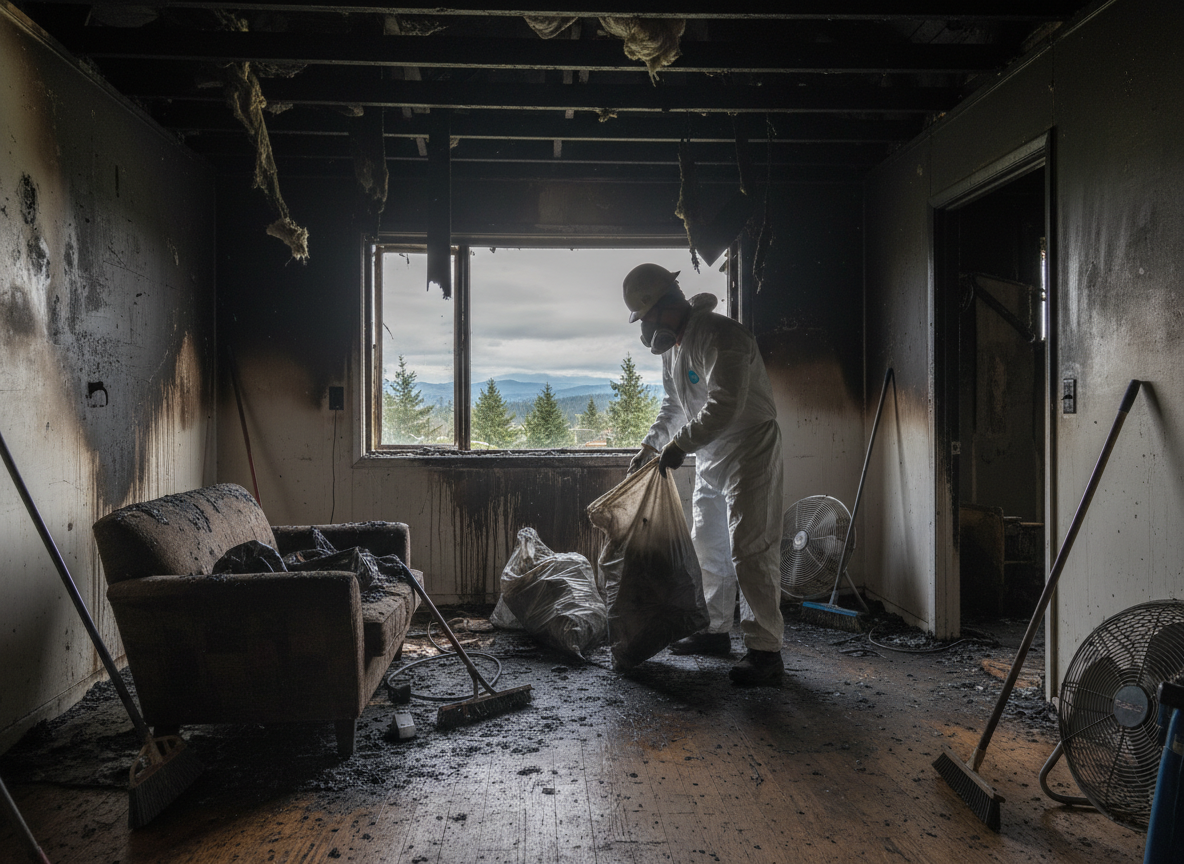
Tenant fire damage cleanup in South Prairie often starts with separating smoke residue from the older single-wall construction common in Pierce County homes built before the 1970s. Wet winters keep relative humidity high, so soot bonds to drywall and insulation faster than in drier climates. Crews must remove affected materials before mold sets in, especially when water from suppression soaks into crawl spaces that sit close to the water table near WA-162.
Landlords and tenants in Enumclaw and Buckley frequently face hidden damage behind kitchen cabinets and in attic insulation where smoke travels through balloon framing. We document every layer removed so insurance adjusters see the actual extent without guessing. Wet winters also mean we run dehumidifiers longer to pull moisture from concrete slabs that never fully dry on their own.
South Prairie rentals near the Carbon River corridor see more odor complaints after fires because heavy vegetation and narrow lots trap smoke. We use air scrubbers and hydroxyl generators sized for the square footage rather than relying on ozone alone, which can damage fabrics still present in tenant units.
Clearing personal belongings requires separating salvageable items from those permanently marked by soot before any cleaning begins. Tenants often store items in unheated garages where winter dampness has already started to set stains deeper into upholstery and electronics.
Technician insight
In South Prairie the thing that catches most people out with tenant fire damage cleanup is how quickly winter rain soaks through the unsealed crawl-space vents on older Pierce County homes, turning light smoke damage into full floor replacement once the subfloor starts cupping.
Kitchen fire in a 1960s South Prairie rental
A cooking fire left heavy soot on cabinets and sent smoke through the open floor plan into bedrooms. We found standing water under the vinyl in the utility room because the wet winter had kept the slab damp. After removing the affected flooring and running dehumidifiers for four days the unit passed clearance and the tenant moved back in without lingering odor.
How it works
- 1
Initial Assessment And Documentation
Walk the unit with the tenant and property manager to map every affected room and note water intrusion points from suppression efforts.
- 2
Containment And Air Filtration
Set up negative air machines and seal doorways to stop soot migration into unaffected bedrooms and closets common in South Prairie layouts.
- 3
Soot Removal And Surface Cleaning
Remove loose soot from walls, ceilings and HVAC registers using dry sponges and HEPA vacuums before any wet cleaning begins.
- 4
Moisture Extraction And Drying
Extract standing water from floors and run commercial dehumidifiers until moisture readings in subfloors and wall cavities return to regional norms.
- 5
Final Odor Neutralization And Clearance
Apply odor counteractants and run air scrubbers until the unit passes a sensory inspection by the property manager.
Pricing
Cost depends on square footage affected, number of rooms with smoke residue, and how long moisture has been present in the structure.