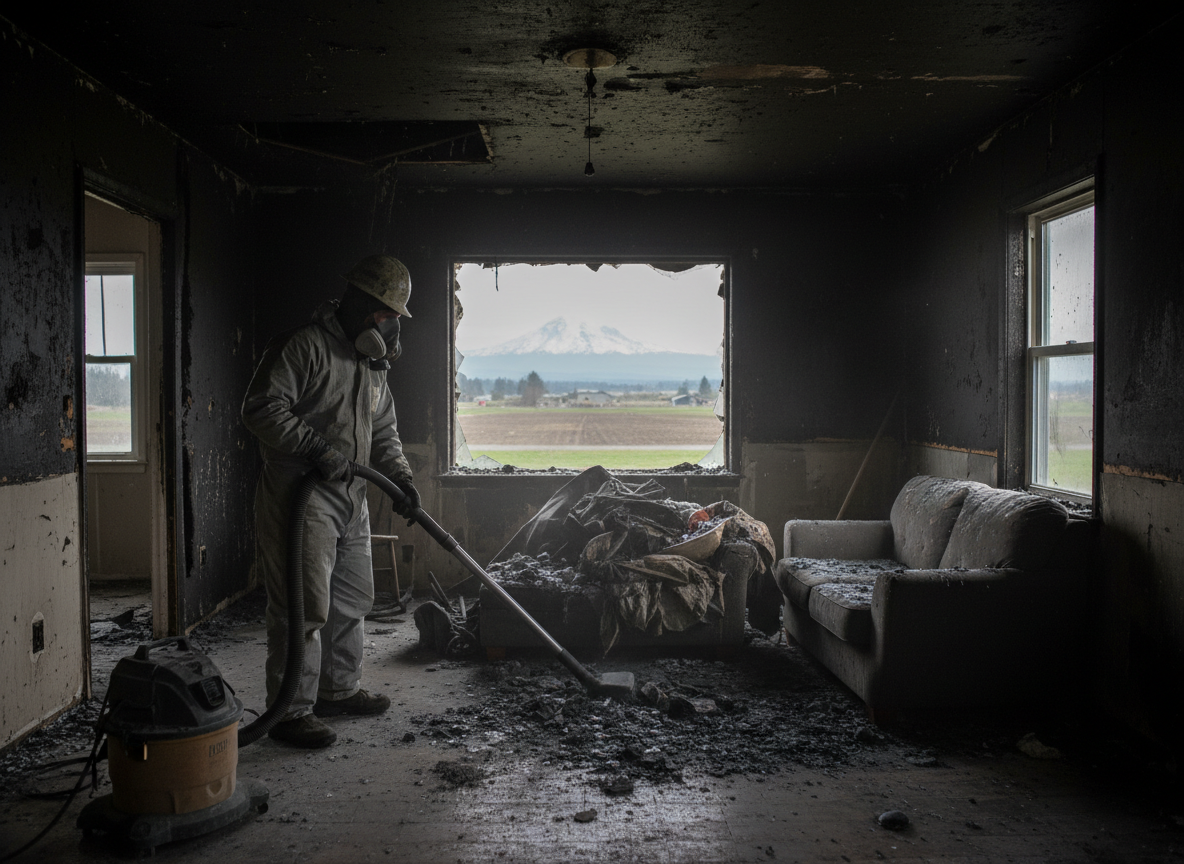
South Prairie sits in Pierce County with a mix of older single-story homes and rural properties that channel smoke and soot into attics, crawlspaces, and wall cavities during a fire. Marine west coast winters keep humidity elevated, so any water used by firefighters lingers in wood framing and insulation. Cleanup crews must remove charred debris first, then use air movers and dehumidifiers sized for the damp conditions to stop mold before it starts. Skipping hidden moisture checks near Buckley or Enumclaw properties often leads to callbacks when winter rains arrive.
Soot on painted surfaces in these homes bonds differently than in newer builds because many South Prairie houses still have original plaster or oil-based finishes from earlier decades. Standard HEPA vacuums alone leave residue that later off-gasses odors into living spaces. Technicians test pH levels on walls and ceilings, apply appropriate emulsifiers, and wipe in one direction to avoid smearing. HVAC systems common in the area pull soot throughout the house, requiring full duct cleaning rather than simple filter changes to prevent recontamination after the job.
Terrain around South Prairie includes gravel driveways and sloped lots that complicate equipment staging when heavy rains follow a fire. Crews stage containment barriers at entry points to keep soot from tracking into unaffected rooms, then bag and remove debris before any cleaning begins. Final clearance includes moisture meter readings in every affected room and a walkthrough with the homeowner to confirm no visible residue remains on baseboards or window sills.
Technician insight
In South Prairie, the thing that catches most people out with Fire damage clean up is how quickly firefighting water turns into a mold problem once the marine west coast wet winters hit. Older homes near Enumclaw and Buckley often have uninsulated crawlspaces where moisture hides, and homeowners skip the drying step thinking the fire is the only issue.
Kitchen Fire Residue in South Prairie Residence
A kitchen fire left heavy soot throughout a single-story South Prairie home. Inspection found water pooled under the subfloor from suppression efforts. Crews contained the area, removed debris, cleaned all surfaces, and ran drying equipment through the wet season. The home passed clearance with no recurring odor or moisture issues.
How it works
- 1
Site Assessment
Inspect all affected rooms, test for hidden moisture in attics and crawlspaces, and document soot levels on different surfaces.
- 2
Containment and Debris Removal
Set up barriers to isolate the work area, bag charred materials, and clear loose debris from floors and ductwork.
- 3
Cleaning and Odor Treatment
Apply pH-appropriate cleaners to walls and ceilings, HEPA vacuum all surfaces, and treat remaining odors with appropriate agents.
- 4
Drying and Final Verification
Run drying equipment sized for local humidity, recheck moisture readings, and confirm the home meets clearance standards.
Pricing
Upfront quotes provided after on-site inspection of soot depth, moisture extent, and home layout.