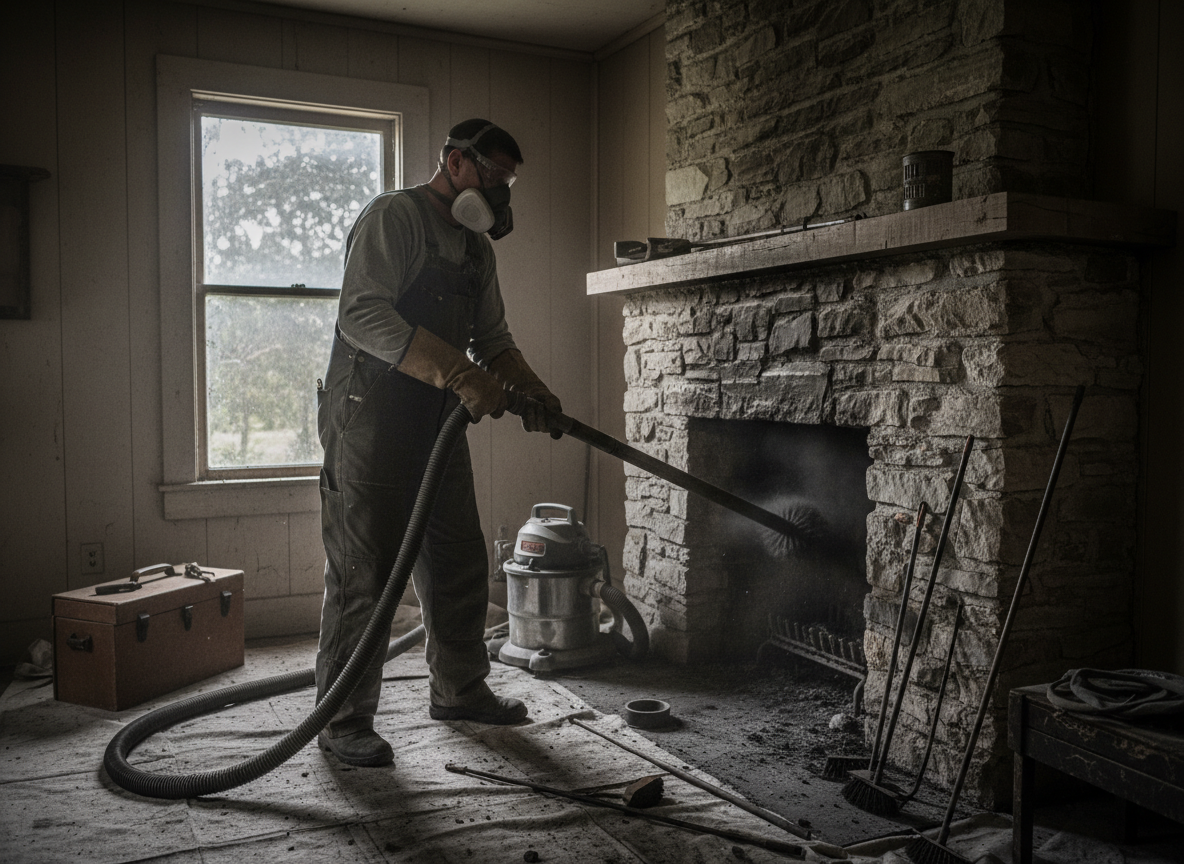
Soot from residential fires in South Prairie settles into the porous wood framing and older plaster common in Pierce County homes built before the 1980s. Marine west coast winters bring frequent rain and high humidity that turns dry soot into a sticky film, driving particles deeper into drywall, insulation, and subflooring. Standard wiping spreads the residue; instead, technicians begin with HEPA-filtered negative-air machines to capture loose particles before any surface contact. Chemical sponges and pH-adjusted cleaners then lift embedded carbon without saturating materials already at risk from moisture intrusion near Enumclaw and Buckley.
Edge cases arise when soot reaches HVAC ductwork or attic spaces in South Prairie properties. Cold, wet air pulled through ducts during winter can condense on metal and carry soot into living areas days after the original fire. Technicians isolate the system, seal registers, and use rotary brushes with vacuum collection rather than compressed air that would redistribute particles. In crawl spaces common to rural Pierce County lots, standing moisture from recent rains combines with soot to create acidic conditions that corrode wiring and fasteners if left untreated.
Homeowners often attempt DIY cleaning with household degreasers, which can etch finished surfaces and void any future insurance documentation. Proper soot removal documents each affected room with photos and moisture readings before work starts, then retests after cleaning to confirm no lingering odors or staining. This process respects the fact that South Prairie’s older homes frequently lack modern vapor barriers, allowing winter dampness to reactivate soot odors long after visible residue is gone.
Technician insight
In South Prairie the thing that catches most people out with soot removal is how the marine west coast wet winters turn loose soot into a penetrating film on older wood and plaster faster than in drier counties, especially in homes near Enumclaw where crawl spaces stay damp for months.
Soot in Attic After Kitchen Fire
A South Prairie homeowner called after a kitchen flare-up sent soot through the single-story home’s attic. We found heavy carbon on rafters and insulation already damp from winter rain. Negative air and dry sponging removed the residue without wetting the insulation further, then we sealed the attic access to prevent re-entry of moisture-laden air from Buckley.
How it works
- 1
Initial Assessment
Inspect all rooms, HVAC paths, and attics for soot migration while noting moisture levels from recent wet weather.
- 2
Containment Setup
Seal affected zones with plastic sheeting and negative air to prevent cross-contamination into unaffected areas of the home.
- 3
Particle Removal
Use HEPA vacuums and dry sponges on walls, ceilings, and contents before any wet cleaning begins.
- 4
Deep Cleaning and Odor Control
Apply pH-balanced solutions to porous surfaces, followed by air scrubbing to neutralize remaining odors.
- 5
Final Verification
Retest surfaces and air quality, then provide documentation for insurance and homeowner records.
Pricing
Cost depends on square footage affected, depth of soot penetration, and whether HVAC or attic work is required; upfront quotes provided after inspection.