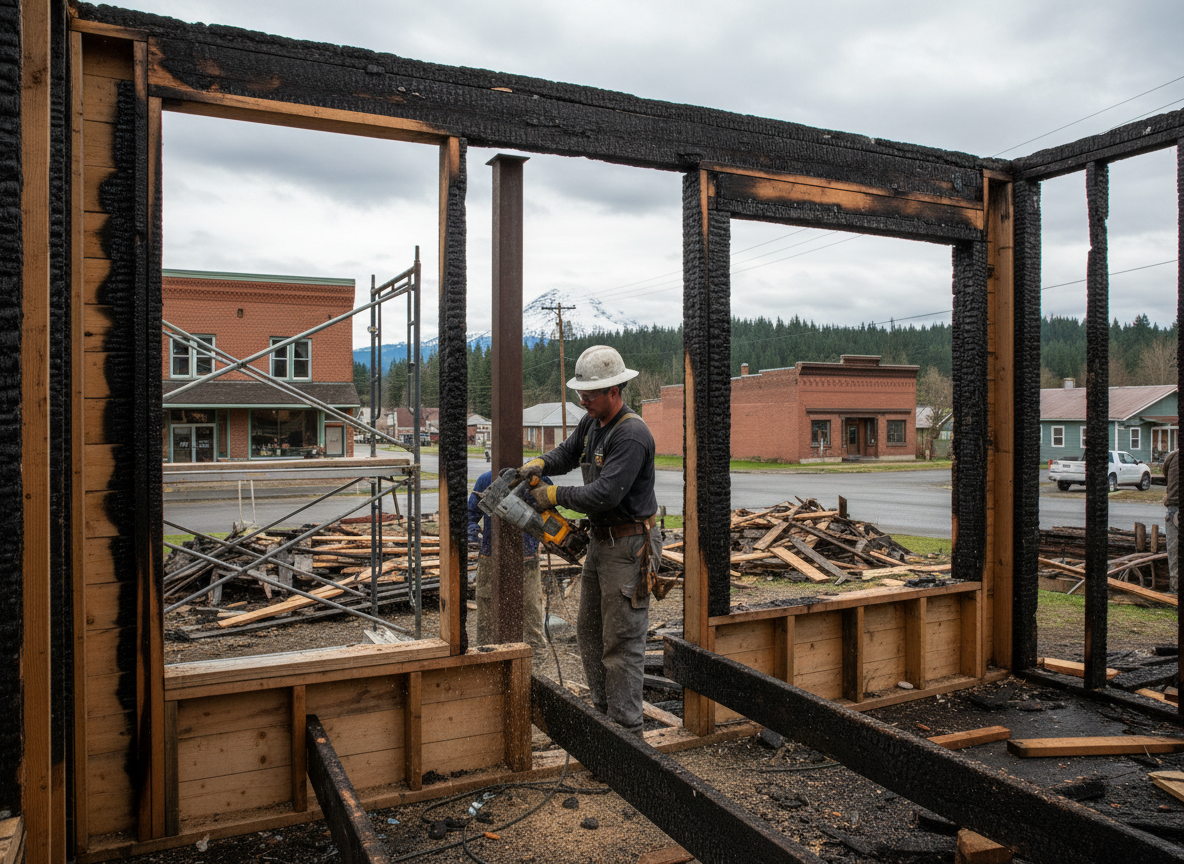
Homes in South Prairie and surrounding Pierce County communities often feature older wood-framed construction that absorbs smoke and water during fire events. After suppression, charred joists and studs lose strength while the region's wet winters introduce ongoing moisture that promotes hidden rot if not addressed promptly. Repairs require selective removal of compromised timber, installation of engineered replacements, and verification against local building codes to maintain structural integrity in areas prone to heavy seasonal rainfall.
Fire crews using water on blazes in Buckley or Enumclaw properties frequently leave saturated cavities that must be dried before any framing work begins. Technicians inspect for delamination in plywood sheathing and check foundation connections where soil saturation from winter rains can shift loads. Proper sequencing prevents secondary issues like mold growth that thrives in the damp climate once temperatures moderate.
Edge cases include partial roof collapses on single-story ranch homes common along WA-162, where wind-driven rain post-fire accelerates deterioration of exposed headers. Crews coordinate with inspectors to ensure new beams meet seismic requirements for Pierce County while preserving original load paths. Delaying these steps risks further settling once the marine layer returns.
Owners in South Prairie should expect temporary shoring during demolition phases to protect adjacent rooms from collapse. All work accounts for the county's permitting process, which reviews changes to fire-rated assemblies in older stock.
Technician insight
In South Prairie, the thing that catches most people out with Structural repair after fire is how quickly winter rains along the Carbon River corridor push moisture deep into floor joists and rim boards of older wood homes. Homeowners often assume visible char is the only issue, but once we open the cavities we find hidden saturation that forces full sistering instead of simple patching. That changes the whole timeline when you're working near Buckley or Enumclaw.
Charred Joists After Kitchen Fire
A South Prairie residence experienced a kitchen fire that spread upward into the attic. We found extensive charring on ceiling joists plus water saturation from suppression efforts that had soaked into the subfloor during a wet spell. We shored the area, replaced compromised members with pressure-treated lumber, and sealed against further moisture before reinstalling insulation and drywall. The structure passed inspection and the homeowners returned without ongoing settling issues.
How it works
- 1
Initial Assessment
Inspect charred and water-affected framing for structural compromise using moisture meters and visual checks in South Prairie homes.
- 2
Shoring and Containment
Install temporary supports to stabilize the structure while containing soot and preventing further water intrusion during wet winter conditions.
- 3
Selective Demolition
Remove damaged timbers and sheathing without disturbing sound elements, then document conditions for Pierce County permitting.
- 4
Replacement and Reinforcement
Install new engineered lumber or steel members, seal against moisture, and restore load paths affected by the marine climate.
- 5
Final Inspection and Finishing
Coordinate code verification and complete cosmetic integration to match existing South Prairie housing stock.
Pricing
Costs depend on the volume of framing replaced, accessibility, and extent of moisture-related complications common after winter fires.