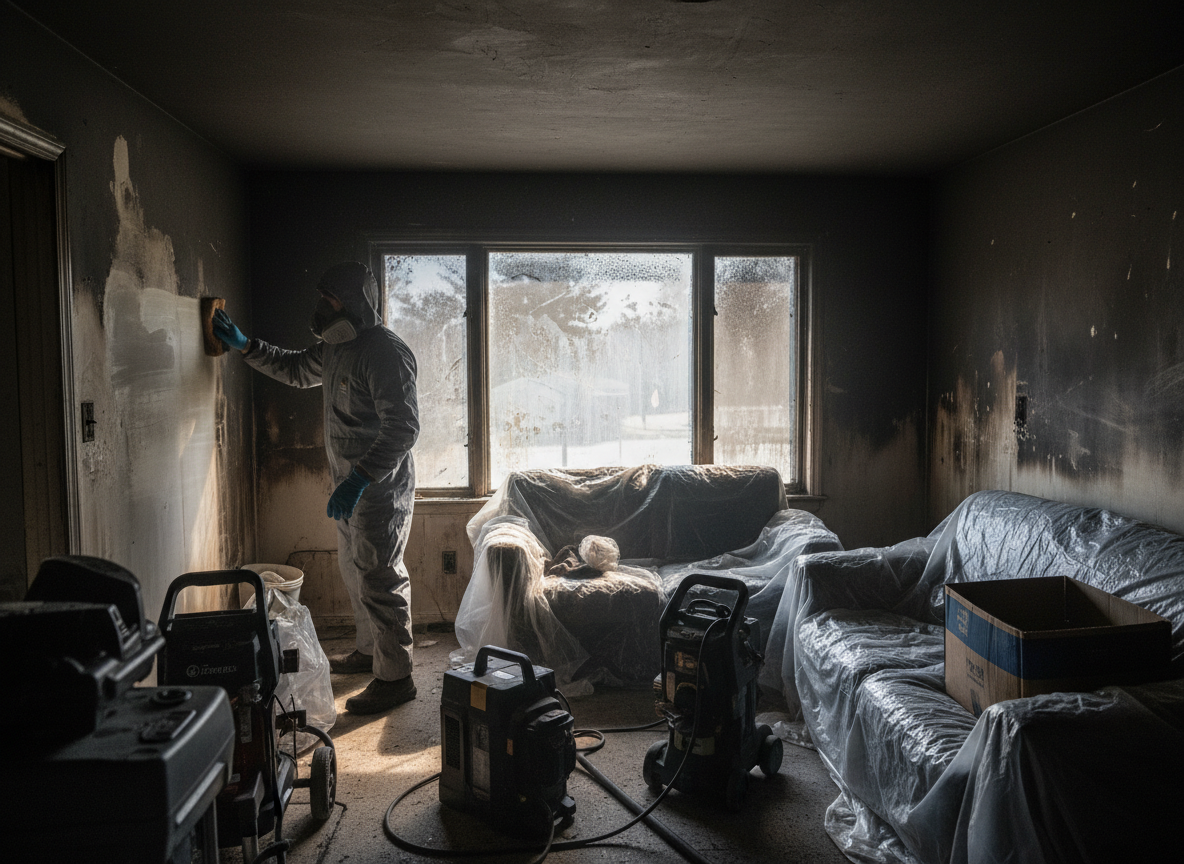
Smoke damage restoration in South Prairie requires careful attention to how marine west coast winters drive humidity into porous building materials. Older homes throughout Pierce County often feature cedar siding, plaster walls, and unsealed attics that trap acidic soot particles carried by the damp air. Technicians must test residue pH levels before cleaning because alkaline or acidic deposits react differently once moisture from Buckley-area rainfall re-enters the structure. Failure to neutralize these residues can cause continued corrosion on metal HVAC components and discoloration on insulation.
Restoration crews working near South Prairie routinely encounter smoke that has migrated through balloon-framed walls common in pre-1970s houses. The constant winter moisture prevents simple vacuuming from removing embedded particles, so solvent-based or thermal fogging methods are selected based on surface type. Crews also inspect crawl spaces where soil dampness combines with smoke to create mold risks after the initial fire event. Proper documentation of each layer removed protects homeowners when insurance adjusters review claims for properties between Enumclaw and Buckley.
Ventilation systems in South Prairie residences frequently pull smoke into ductwork during winter heating cycles. Restoration includes removing and cleaning or replacing sections of flex duct that have absorbed odors, followed by negative-air scrubbing to prevent redistribution. Technicians also address secondary damage on concrete foundations where water used during firefighting pools and mixes with soot, creating staining that requires specialized poultice treatments before sealing.
Technician insight
In South Prairie, the thing that catches most people out with Smoke damage restoration is how winter rain keeps humidity high enough for acidic soot to keep eating into the plaster and cedar found in most older Pierce County homes between here and Enumclaw.
Living Room Fire Residue in South Prairie
Smoke from a fireplace malfunction spread through an older home near WA-162. We found soot had entered wall cavities and the crawl space due to the damp winter air. We contained the areas, cleaned residues with appropriate solvents, and treated the HVAC before reinstalling insulation. The family returned without lingering odors.
How it works
- 1
Initial Assessment
Inspect all affected rooms, test residue pH, and map smoke migration paths through the home's structure.
- 2
Containment Setup
Isolate damaged zones with plastic barriers and negative air machines to stop soot spread during cleaning.
- 3
Residue Removal
Apply appropriate cleaning agents or fogging methods to walls, ceilings, ducts, and contents based on smoke type.
- 4
Odor Neutralization and Final Clearance
Use air scrubbers and thermal foggers, then verify surfaces are residue-free before reconstruction begins.
Pricing
Pricing varies based on the size of affected areas, smoke residue type, and whether HVAC or insulation requires replacement.