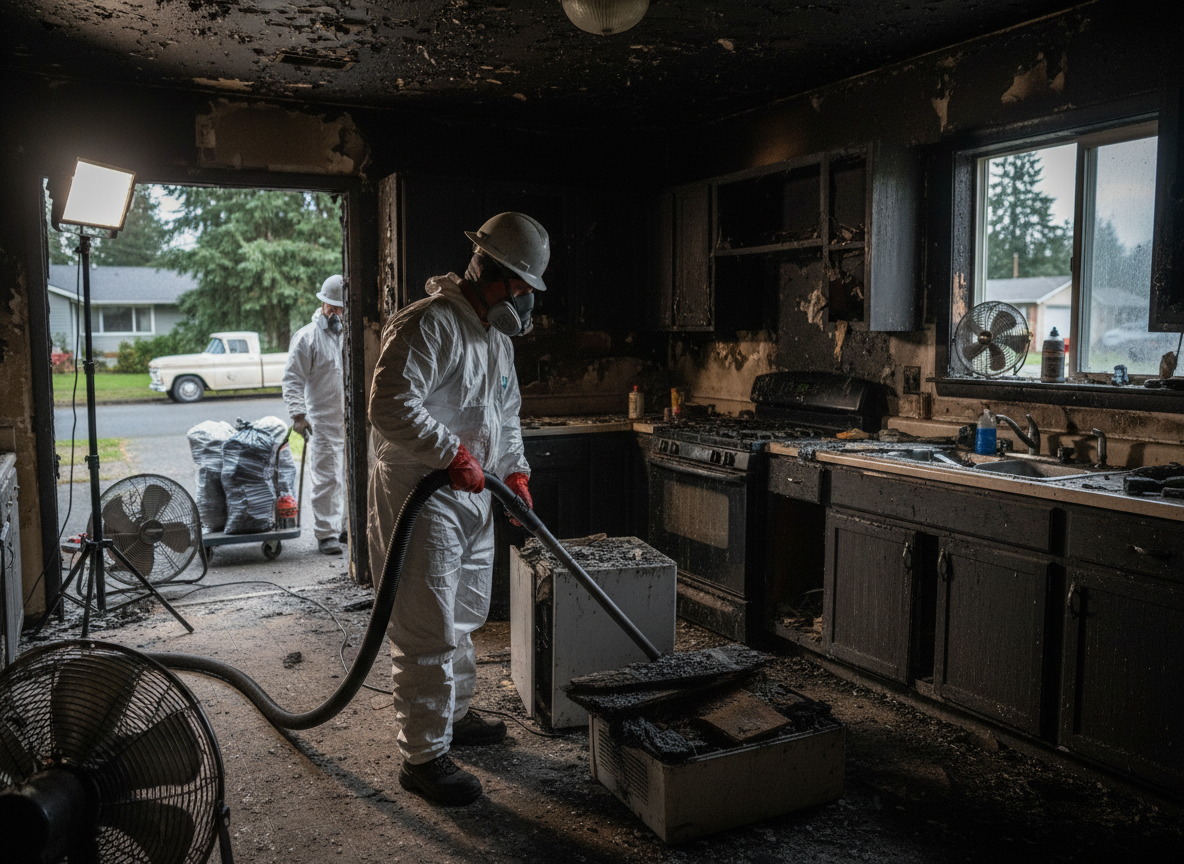
Kitchen fires in South Prairie often start from grease or electrical faults in older Pierce County homes built before modern codes. Residue from these fires penetrates porous materials like oak cabinets and plaster walls common in the area. Marine west coast winters keep humidity elevated, so smoke particles bond with moisture and accelerate corrosion on metal fixtures if cleaning is delayed. Technicians must test for hidden char behind appliances and under flooring before sealing surfaces.
Cleanup crews working near Enumclaw and Buckley roads encounter terrain challenges where narrow driveways limit equipment access to properties tucked against the foothills. Soot from kitchen fires travels through HVAC systems in single-story ranches typical of South Prairie, requiring full duct inspection rather than surface wiping alone. Water used during suppression can pool in crawl spaces during wet seasons, raising the risk of secondary mold growth that complicates odor removal.
Edge cases include fires that reach range hoods and migrate into attic insulation, a frequent issue in homes along WA-162 where rooflines trap heat. Proper disposal of contaminated drywall and cabinetry follows Pierce County waste rules to avoid cross-contamination during transport. Final air scrubbing must account for persistent odors in closed kitchens during winter months when windows stay shut.
Technician insight
In South Prairie, the thing that catches most people out with Kitchen fire cleanup is how our wet winters keep humidity high enough that smoke residue in older Pierce County homes starts corroding copper wiring and fixtures within days if crews do not neutralize it immediately.
Kitchen Fire Spread in South Prairie Home
A grease fire on a stove spread to nearby cabinets in a 1970s ranch off WA-162. Inspection revealed soot throughout the HVAC and moisture trapped under the vinyl floor from winter rains. Crews contained the area, removed affected drywall and insulation, cleaned ducts, and treated surfaces for odor before reinstalling finishes.
How it works
- 1
Initial Assessment
Technicians arrive within hours to document damage extent, test surfaces for pH levels from smoke, and identify affected zones in the kitchen and adjacent rooms.
- 2
Containment and Safety
Plastic barriers and negative air machines isolate the kitchen while crews remove charred materials and secure utilities to prevent further spread in the humid climate.
- 3
Deep Cleaning
Specialized agents neutralize grease and soot on cabinets, appliances, and ductwork, followed by HEPA vacuuming and multiple passes to lift embedded particles.
- 4
Restoration and Verification
Repairs to affected structures, odor treatment, and clearance testing confirm the space meets habitability standards before homeowners return.
Pricing
Costs depend on fire size, materials affected, and whether HVAC cleaning or structural repairs are required; quotes provided after inspection.