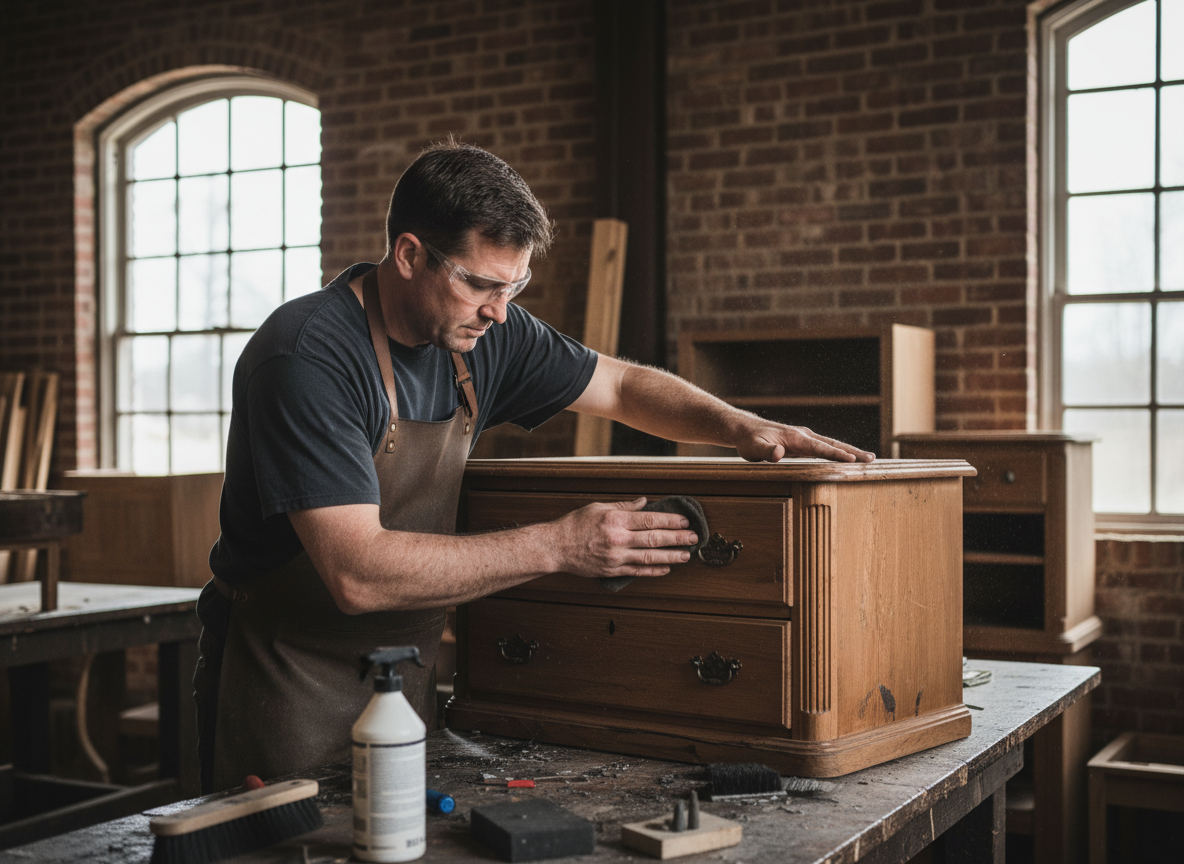
Furniture in South Prairie homes often includes older wood pieces and upholstered items that absorb acidic smoke from fires. Marine west coast winters bring persistent dampness that turns light soot into corrosive layers on tabletops and inside drawers. Technicians start by isolating each piece in a climate-controlled space to stop the moisture from swelling joints or lifting veneers common in Pierce County houses built before central heating upgrades.
Upholstery and leather require different neutralizers than bare wood because residue lingers in padding and seams. Edge cases appear when smoke travels through HVAC systems into bedrooms, leaving fine particles on mattresses and nightstands that later cause odors during wet weather. Homeowners who attempt DIY cleaning with household products often drive the soot deeper, creating permanent staining that only professional extraction can address.
Regulation notes include proper disposal of heavily contaminated cushions under Pierce County waste rules and documenting condition for insurance claims. We test pH levels on finishes before any solvent use and ventilate pieces outdoors when humidity drops below typical winter levels to avoid trapping moisture inside frames.
Technician insight
In South Prairie, the thing that catches most people out with fire-damaged furniture restoration is how quickly the wet winters turn light smoke film into mold inside dresser drawers and under tabletops. Older Pierce County homes near Buckley often hold antique pieces with unsealed interiors that trap moisture from the marine climate, and homeowners who store items in unheated garages before we arrive usually face warped frames we cannot fully reverse.
Soot-Covered Oak Sideboard After Kitchen Fire
Problem: Soot from a stove fire coated an oak sideboard in a South Prairie house. What we found: Acidic residue had etched the top and damp winter air had begun swelling the lower drawers. What we did: Isolated the piece, neutralized residues, and dried it in a dehumidified space before refinishing. Outcome: The sideboard returned to use without further warping or odor.
How it works
- 1
On-Site Assessment
Inspect each piece for smoke penetration, water exposure, and material type while noting location in the home.
- 2
Containment and Transport
Wrap items to prevent cross-contamination, then move them to a controlled drying area at our South Prairie location.
- 3
Residue Removal
Apply pH-balanced cleaners and HEPA vacuuming to wood, fabric, and leather without spreading soot.
- 4
Drying and Odor Treatment
Use dehumidifiers and air scrubbers matched to the marine climate to eliminate hidden moisture and smells.
- 5
Refinishing and Return
Repair finishes where needed and return pieces once testing confirms no active residues remain.
Pricing
Pricing varies by number of pieces, materials, and extent of smoke versus water damage. We provide upfront quotes after inspection.