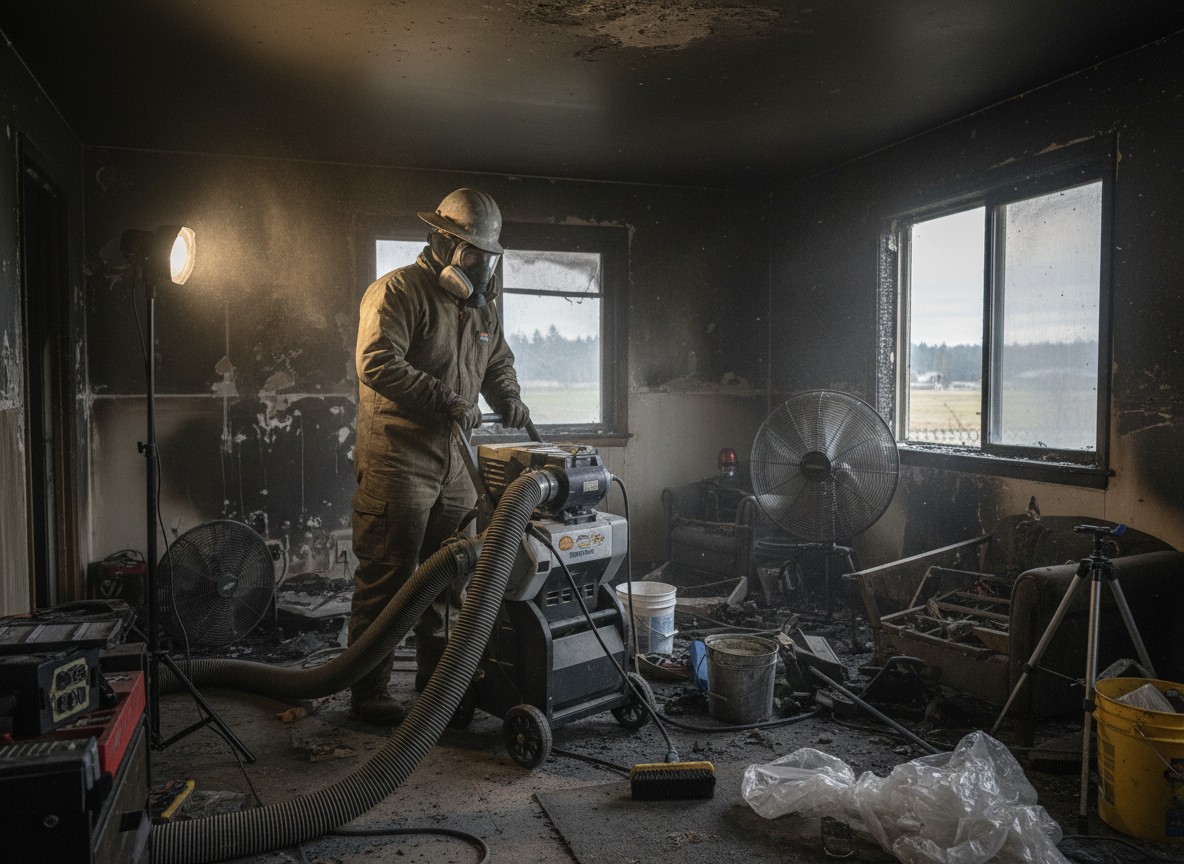
South Prairie sits in Pierce County with many older wood-frame homes built before modern fire codes, where balloon framing lets smoke travel quickly into attics and wall cavities. Marine west coast winters bring constant moisture that can lock smoke residues into porous materials like plaster and insulation, creating secondary odors months after the fire is out. Restoration crews must pull drywall early in these conditions rather than rely on surface cleaning alone.
Smoke from typical residential fires here often carries resins from local Douglas fir framing, which bonds tightly to metal ductwork and electrical boxes. Technicians use negative-air machines with HEPA filtration and thermal fogging to reach those hidden paths without spreading particulates into unaffected rooms. Wet winters also mean any water used during suppression can linger in crawl spaces, so moisture mapping with meters is required before sealing cavities.
Near Buckley and Enumclaw, wind patterns along WA-162 can push smoke into neighboring properties, requiring documentation of migration paths for insurance claims. Crews document char depth on structural beams and test pH levels on surfaces because alkaline soot from synthetic furnishings can corrode copper wiring if left untreated. Final clearance testing checks for both particulate counts and odor return after humidity spikes.
Homeowners in South Prairie often discover that vinyl siding and asphalt shingles common on 1970s-1990s builds release additional VOCs when heated, complicating odor removal. Proper sequence calls for removing these exterior materials first in affected sections before interior work begins, preventing recontamination during the wet season when drying times stretch longer.
Technician insight
In South Prairie, the thing that catches most people out with fire and smoke damage restoration is how the wet winters let residual moisture in Pierce County crawl spaces turn light smoke film into permanent odor problems inside older balloon-framed homes near WA-162.
Kitchen Fire Smoke in 1980s South Prairie Home
A cooking fire sent smoke through the kitchen into the attic of a South Prairie house off WA-162. We found soot lodged in fiberglass insulation and along roof sheathing due to the home's open ceiling design. After removing affected insulation and running negative air with thermal fogging, we dried the space through the wet winter months and restored the attic without odor return.
How it works
- 1
Emergency Board-Up and Site Assessment
Secure the property and document all affected areas including attics and crawl spaces common in South Prairie homes.
- 2
Soot and Debris Removal
Remove charred materials and loose soot using HEPA vacuums before any cleaning agents are applied.
- 3
Odor Neutralization and Cleaning
Apply thermal fogging and air scrubbing calibrated for the damp Pierce County climate to reach embedded smoke residues.
- 4
Structural Drying and Restoration
Dry wet assemblies and replace damaged drywall, insulation, and finishes while monitoring humidity levels through winter months.
- 5
Final Clearance and Documentation
Test surfaces and air quality, then provide reports for insurance adjusters handling claims from Buckley and Enumclaw properties.
Pricing
Pricing varies by fire size, materials affected, and how far smoke traveled into wall cavities; upfront written estimates provided after on-site inspection.