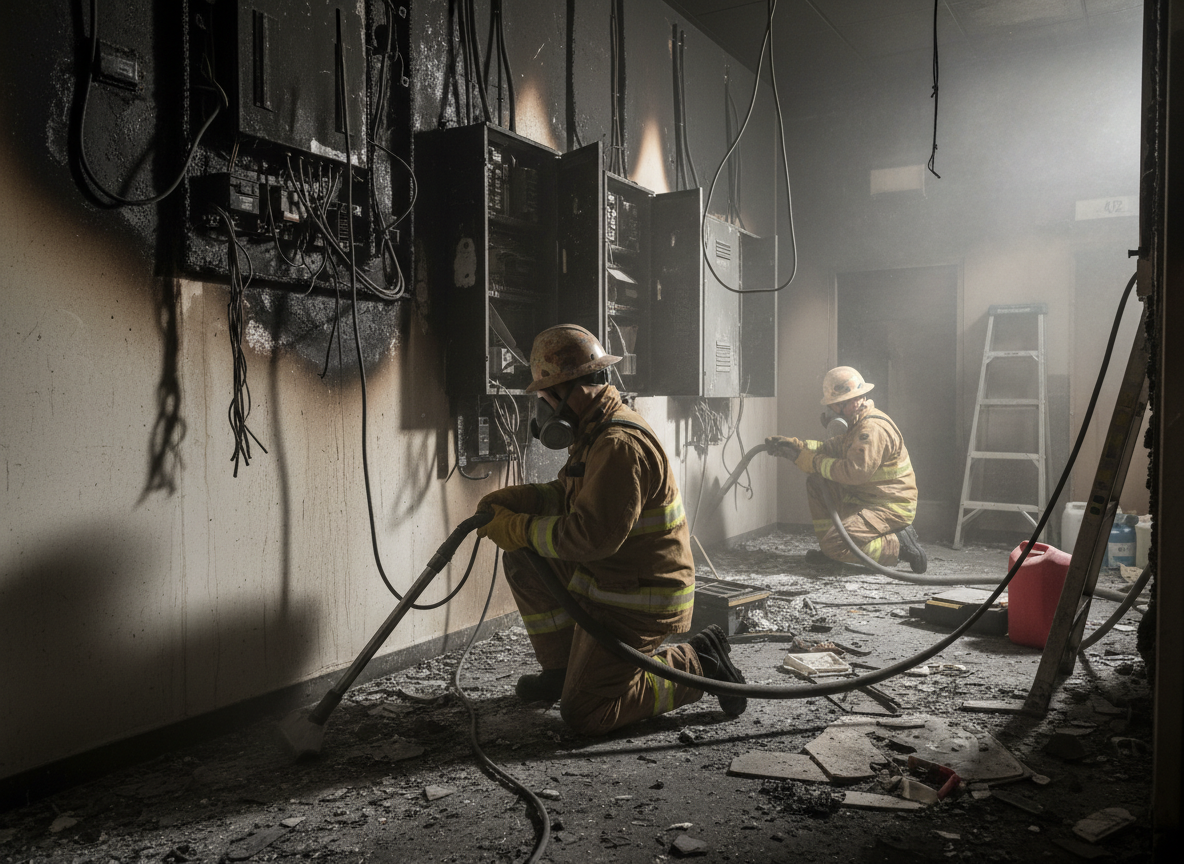
Electrical fires in South Prairie often start in older ranch homes and manufactured houses built before the 1990s, where aluminum wiring and outdated panels are common. After the flames are out, acidic soot from burning PVC and insulation settles into wall cavities and HVAC systems, corroding copper over weeks if not neutralized. The marine west coast climate brings frequent rain and high humidity that keeps residues damp, raising the risk of hidden corrosion and secondary mold growth in crawl spaces common to the area.
Cleanup begins with isolating affected circuits at the panel, followed by HEPA vacuuming and chemical neutralization of soot on surfaces. Technicians check for arc faults that may have traveled through shared walls into neighboring units in South Prairie’s tighter subdivisions. Wet winters complicate drying, so dehumidifiers and air movers run longer than in drier climates to prevent moisture from wicking into subfloors near the Carbon River floodplain.
Homeowners in nearby Enumclaw and Buckley sometimes see smoke migration through shared ducts or attics during wind-driven storms. Proper documentation of pre-existing wiring conditions helps avoid disputes with insurers over what constitutes fire-related damage versus age-related wear in Pierce County properties.
Technician insight
In South Prairie, the thing that catches most people out with electrical fire cleanup is how the constant winter rain keeps soot damp inside wall cavities, letting it eat through copper wiring faster than in drier counties. Homeowners often try wiping surfaces themselves and just smear the acidic residue deeper into older plaster or paneling common around WA-162.
Attic Wiring Fire After Storm
A South Prairie homeowner noticed burning smells after a wet winter windstorm. Inspection found arcing in 1970s aluminum wiring in the attic that had spread soot through shared ducts into two bedrooms. Crews isolated the circuits, contained the soot with negative air, neutralized residues, and ran extended drying to counter high humidity before restoring power.
How it works
- 1
Site Assessment and Safety
Technicians arrive 24/7 at the South Prairie address, shut off power, and test for live hazards before any entry.
- 2
Soot Containment
Negative air machines and plastic barriers isolate the affected rooms to keep acidic particles from spreading into unaffected areas during wet weather.
- 3
Cleaning and Neutralization
HEPA vacuuming followed by pH-balanced washes removes soot from walls, ceilings, and HVAC components while monitoring humidity levels.
- 4
Final Drying and Verification
Moisture meters confirm drying in crawl spaces and attics, then post-clean air sampling verifies particle levels before power restoration.
Pricing
Cost depends on square footage affected, depth of soot penetration into walls, and extra drying time required by Pierce County’s wet winters.