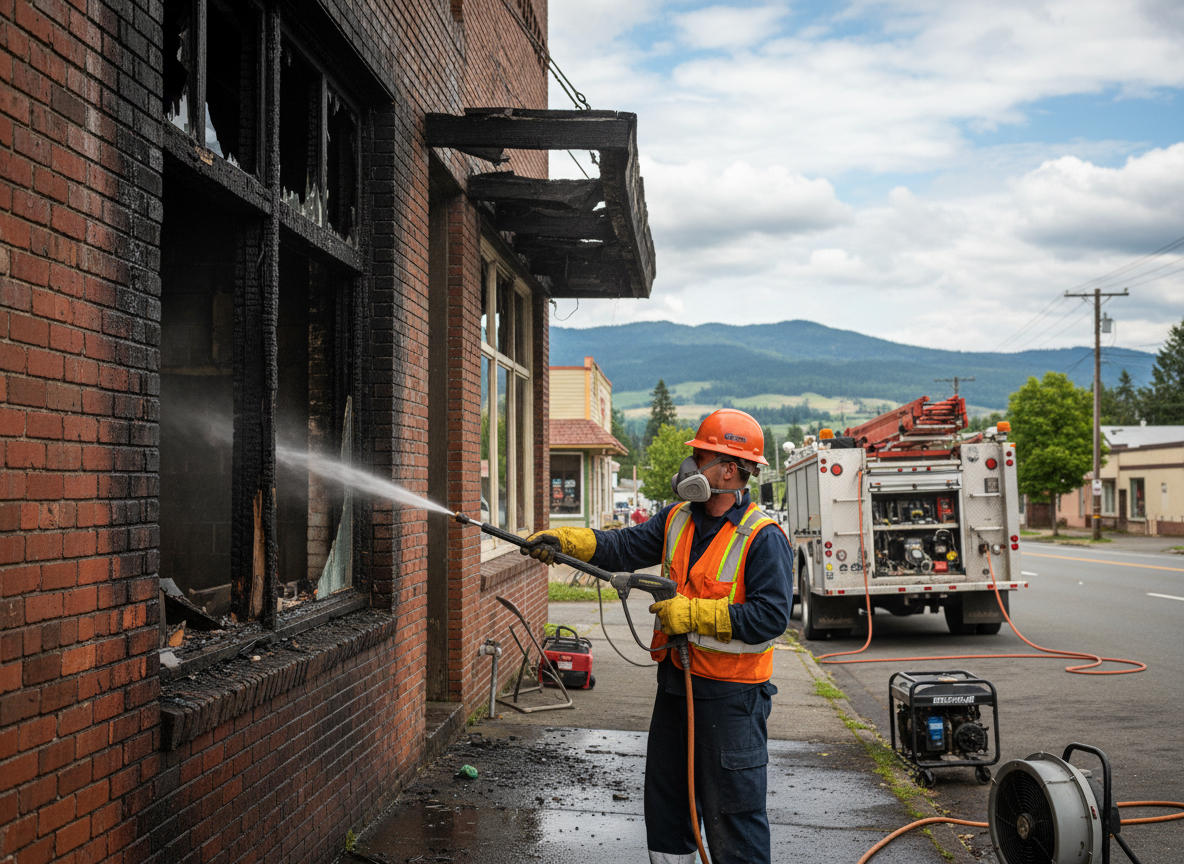
Commercial buildings in South Prairie and along the WA-162 corridor often feature older timber framing and metal roofing that trap soot deep into cavities once fire suppression water saturates the structure. Marine west coast winters bring steady rain and high humidity that prevent natural drying, so crews must run negative-air machines and dehumidifiers for days longer than in drier climates to stop secondary mold on charred joists. Local codes in Pierce County require permits before any load-bearing repair begins, and inspectors check that all electrical runs damaged by heat are replaced rather than patched.
Smoke migration through shared HVAC systems in strip malls near Enumclaw and Buckley frequently affects multiple tenant spaces even when the original fire stayed contained. Restoration teams isolate ductwork, clean or replace coils, and verify airflow with manometer readings before tenants can reopen. Edge cases include hidden char behind brick veneer on older commercial storefronts and fuel-oil residue from equipment that requires specialized degreasers to meet disposal rules at the local transfer station.
Business interruption is the main pressure point for owners in Buckley and South Prairie. Work plans prioritize temporary power and weatherproofing so operations can resume in unaffected sections while full reconstruction proceeds. Crews document every step with daily moisture logs and photo reports so insurance adjusters see the progression without repeated site visits during the wet season.
Technician insight
In South Prairie the thing that catches most people out with commercial fire restoration is how quickly winter rain drives moisture into charred floor joists and wall cavities along the river corridor. You can clear visible soot in a day, but if you skip the extra drying time the insurance company will be back six months later when tenant complaints start.
Strip Mall Unit After Kitchen Fire
A small restaurant kitchen fire in South Prairie spread smoke through the shared ceiling plenum into two neighboring retail spaces. High humidity kept soot wet and clinging to acoustic tile and ductwork. Crews isolated the HVAC, ran drying equipment for nine days, removed saturated insulation, and completed repairs so the unaffected shops reopened while the restaurant space was rebuilt.
How it works
- 1
Emergency Board-Up and Site Secure
Install temporary barriers and tarps to protect the structure from ongoing rain while crews assess damage.
- 2
Soot and Residue Removal
Use HEPA filtration and appropriate cleaners on all surfaces, paying special attention to HVAC and electrical systems.
- 3
Moisture Extraction and Drying
Deploy industrial equipment to remove water from fire suppression and monitor levels until readings meet commercial standards.
- 4
Structural Repairs and Code Compliance
Replace damaged framing, update electrical as required by Pierce County inspectors, and finish surfaces for re-occupancy.
Pricing
Pricing varies by building size, extent of smoke migration, and required drying time during wet months; written estimates provided after on-site evaluation.