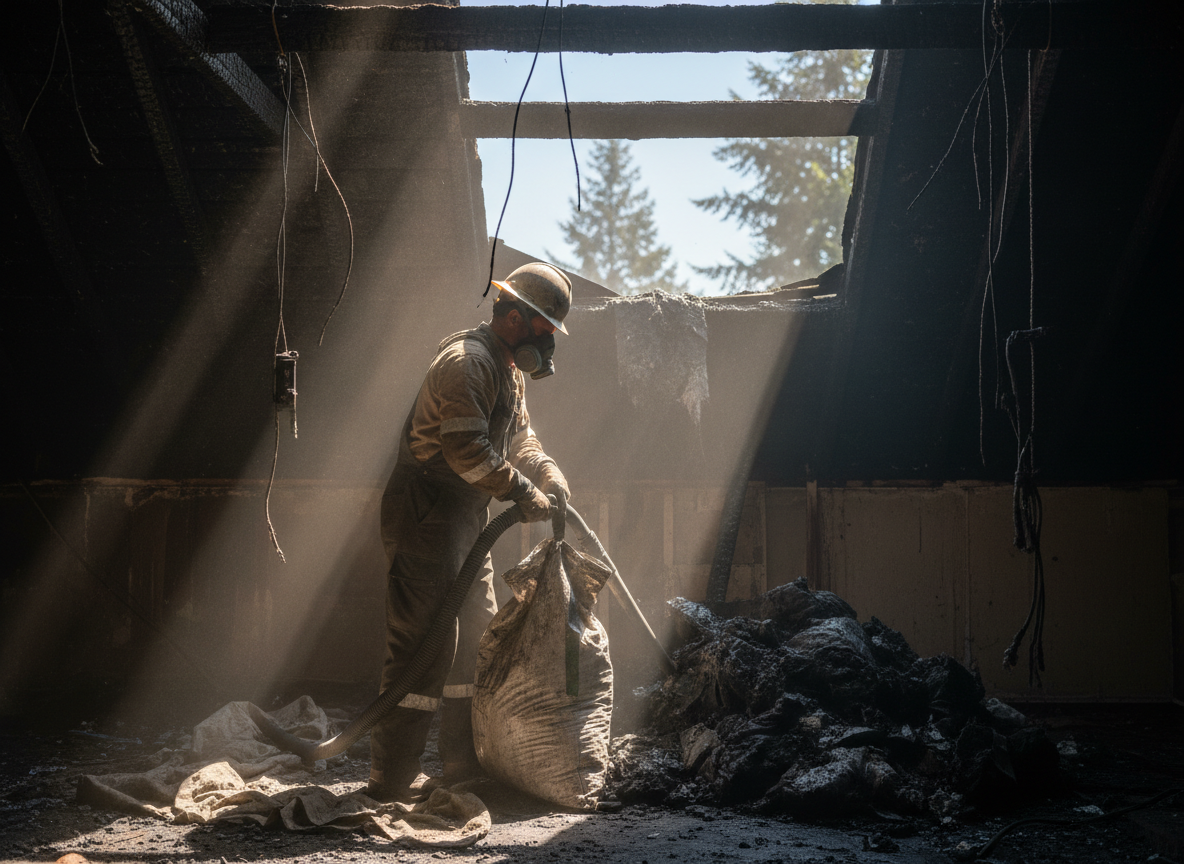
Attic fires in South Prairie homes often start from electrical faults in older knob-and-tube wiring common in Pierce County properties built before the 1970s. Once flames reach insulation, smoke travels through roof vents and wall cavities, leaving acidic soot on rafters and trusses. Marine west coast winters bring constant moisture that turns dry soot into corrosive residue, requiring immediate neutralization to prevent further wood degradation. Technicians must remove affected fiberglass batts or blown cellulose while checking for hidden ember pockets that can reignite days later.
Restoration work here differs from dryer climates because wet winters slow drying times and increase the chance of secondary mold growth in roof decking. Crews use negative air machines with HEPA filtration to contain particles before they settle into living spaces below. Electrical boxes and junction points in the attic receive extra scrutiny since Washington code requires updated AFCI protection after any fire-related repair. Homeowners in nearby Enumclaw and Buckley frequently discover that insurance adjusters underestimate the extent of insulation removal needed when soot has penetrated between ceiling joists.
Edge cases include chimney chases that allow smoke to bypass standard attic access points and metal roof panels that conduct heat downward, charring sheathing without visible exterior damage. Proper documentation of pre-existing water stains from Pierce County rainfall helps separate fire claims from chronic leaks. Final clearance testing checks for volatile organic compounds that linger in porous wood after chemical neutralization.
Technician insight
In South Prairie, the thing that catches most people out with attic fire restoration is how our wet winters turn soot into an acid that eats into rafters if you don't neutralize it the same day. Older homes near Buckley often have blown-in cellulose that holds moisture longer than fiberglass, so you end up pulling twice as much material once the fire investigation is done.
Hidden Soot in South Prairie Attic
A homeowner in South Prairie noticed a burning smell after an electrical short in the attic. Inspection found soot had traveled through ceiling joists into bedrooms below. Crews contained the space, removed affected insulation, neutralized acidic residue on rafters, and installed new batts once moisture readings dropped. The home passed clearance testing with no lingering odors.
How it works
- 1
Initial Assessment
Technicians inspect the attic from the address at 117 WA-162, documenting char patterns, smoke migration paths, and moisture levels in South Prairie homes.
- 2
Containment and Safety
Plastic sheeting and negative air setups isolate the work zone to keep soot from reaching living areas below during removal.
- 3
Soot Removal and Cleaning
Specialized sponges and HEPA vacuums clean rafters and sheathing while removing contaminated insulation without disturbing structural members.
- 4
Drying and Restoration
Dehumidifiers and air movers address winter moisture, followed by replacement of insulation and any charred wood before final clearance testing.
Pricing
Upfront quotes provided after on-site inspection; cost driven by attic size, insulation type, and extent of hidden damage.