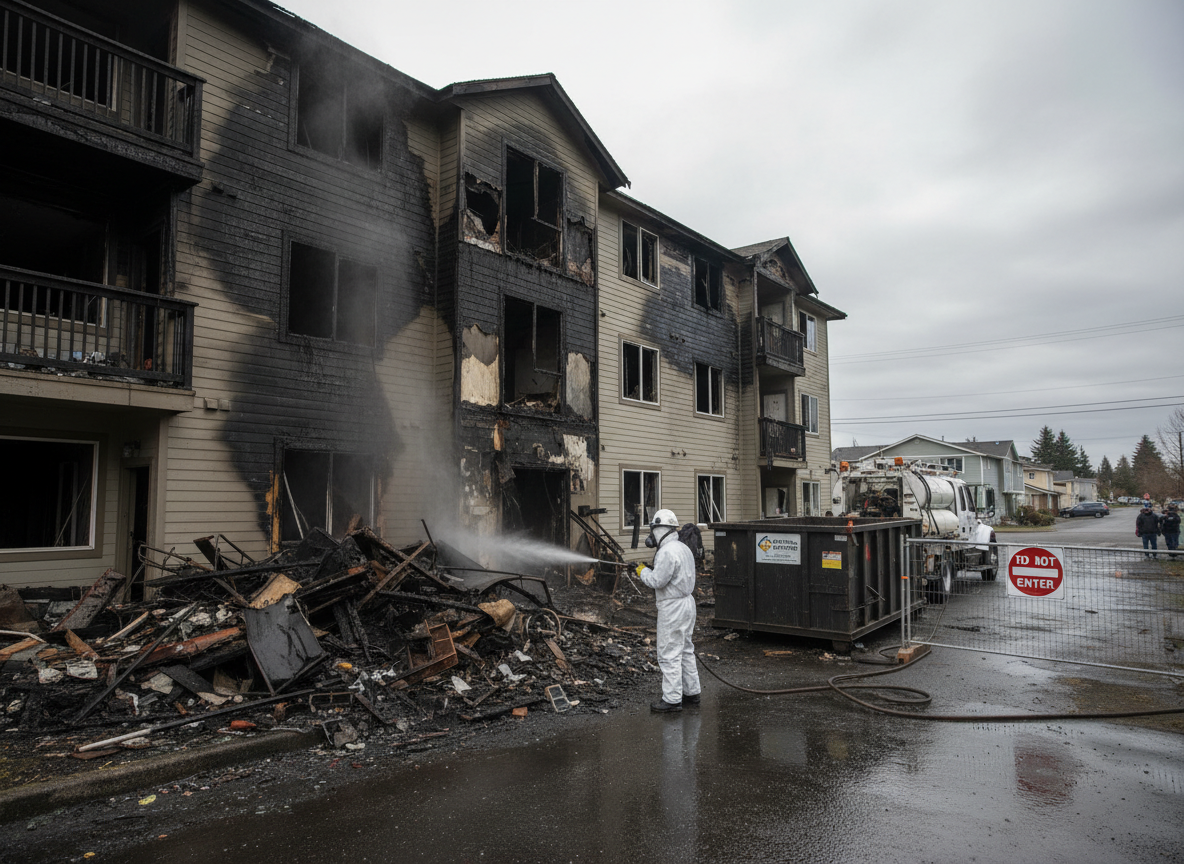
Apartment fires in South Prairie often involve older multi-unit buildings along routes like WA-162 where shared walls and aging HVAC systems let smoke travel quickly into insulation and attic spaces. Wet winters accelerate soot penetration into porous materials like drywall and carpet padding, raising the risk of hidden mold growth if drying is delayed. Crews must test for corrosive residues from burned plastics common in 1970s-1990s construction before sealing surfaces.
Suppression water left standing combines with the region's frequent rain to create secondary damage in crawlspaces and slab foundations typical around Buckley and Enumclaw borders. Specialized air movers and dehumidifiers run longer here than in drier climates to reach acceptable moisture levels before reconstruction. Odor neutralization requires sealing concrete and subflooring rather than simple surface sprays because persistent dampness reactivates smells.
Edge cases include electrical wiring hidden behind lath-and-plaster in pre-1960 units near downtown South Prairie, where incomplete removal can cause future shorts. Code requires full containment of affected units to protect neighboring apartments, and all debris must be disposed following Pierce County landfill rules for burned materials. Final clearance testing checks both particulate levels and humidity to prevent callbacks during the long rainy season.
Technician insight
In South Prairie, the thing that catches most people out with Apartment fire cleanup is how quickly marine west coast moisture soaks smoke residue into the older drywall and subfloors common along WA-162. Homeowners often try to air out units themselves, but that just spreads damp soot into neighboring apartments and sets up mold before we even arrive.
Kitchen Fire Spread in South Prairie Apartment
A cooking fire in a ground-floor unit near WA-162 sent smoke through shared vents into upstairs apartments. We found heavy soot in insulation and standing water from suppression that had wicked into carpet padding. Containment, HEPA cleaning, extended drying, and odor sealing restored the units without mold issues despite ongoing winter rains.
How it works
- 1
Site Assessment
Inspect all affected units and shared systems for soot migration and water intrusion while documenting damage for insurance.
- 2
Containment and Safety
Seal off the apartment and adjacent spaces, remove hazards, and set up negative air to protect neighboring residents.
- 3
Soot and Debris Removal
Clean surfaces, HVAC ducts, and insulation using HEPA equipment suited to damp Pierce County conditions.
- 4
Drying and Odor Treatment
Deploy drying equipment and apply odor sealants, running systems longer to counter wet winter humidity.
- 5
Final Restoration and Clearance
Repair or replace materials, conduct moisture and air quality checks, and return the unit ready for occupancy.
Pricing
Upfront quotes provided after on-site inspection; final cost depends on square footage affected, depth of soot, and extent of water damage.