2026-10-17 ·
How Smoke Travels Through Older South Prairie Houses
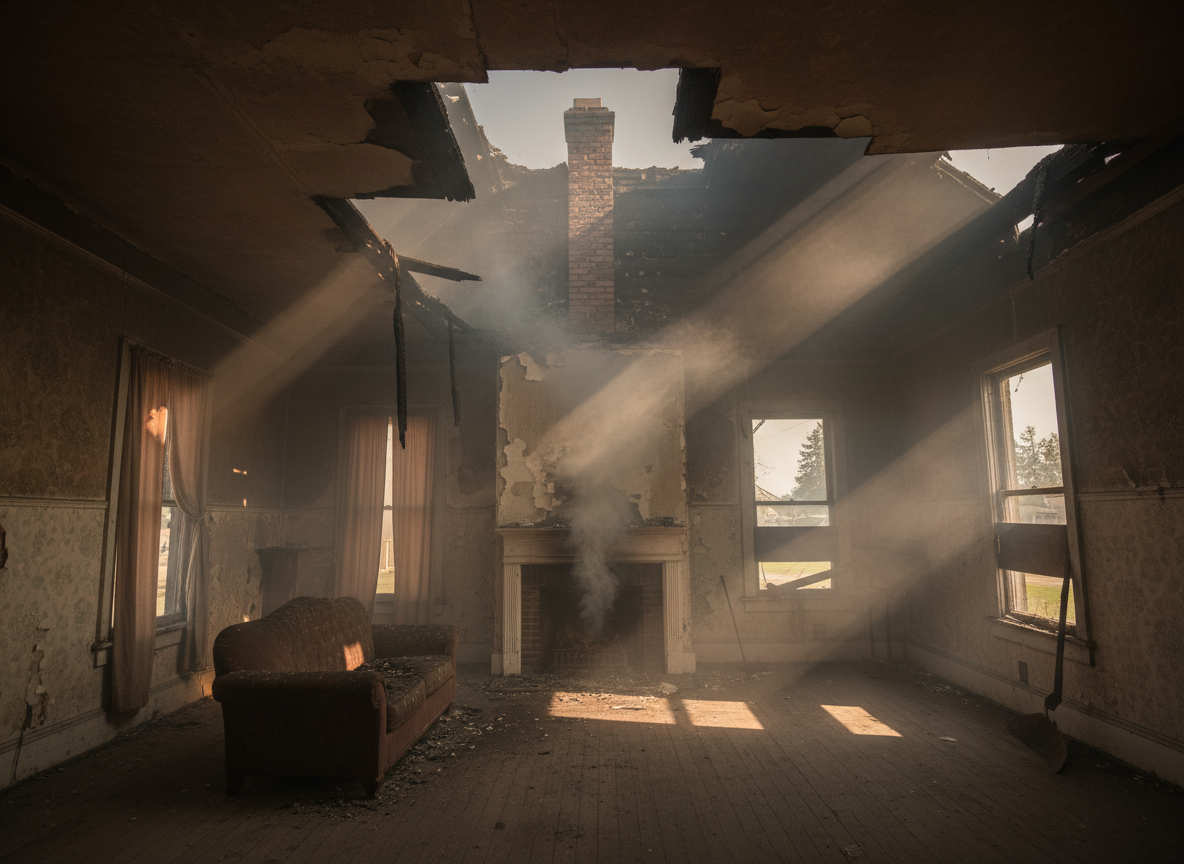
Smoke travels through older South Prairie houses primarily via open wall cavities and continuous attic runs, often crossing 30 feet or more within the first 10 minutes of a fire. These paths form because many homes built before 1950 in Pierce County use balloon framing with unbroken stud bays from foundation to roof. Marine west coast winters bring constant moisture that later traps soot particles inside those same voids, making full removal harder than in newer sealed construction.
Balloon Framing Creates Direct Pathways
Most houses along WA-162 and nearby side streets in South Prairie retain the original two-by-four studs that run uninterrupted from the first floor to the attic. When fire starts in a kitchen or basement, heated air and particulates rise straight up these channels and exit into second-floor rooms or the attic without hitting fire stops. Homeowners in Enumclaw and Buckley report the same pattern because the housing stock shares the same era and framing style. Once smoke exits the top plate into the attic, it spreads laterally under the roof deck and drops into adjacent bedrooms through ceiling penetrations. This vertical movement explains why bedrooms on the opposite side of the house often show heavy soot even when the fire stayed contained to one corner.
Attic Spaces and Shared Rooflines
South Prairie’s older homes frequently have connected or closely spaced rooflines that allow smoke to migrate between structures during wind-driven events common in fall and winter. The marine climate keeps attic humidity high year-round, so smoke residue mixes with condensation on rafters and sheathing. Over weeks this mixture bonds to wood fibers and insulation, requiring targeted cleaning rather than simple airing out. Properties near the Carbon River corridor see additional airflow through gable vents that pull smoke from one house into the next during the initial fire event.
Plaster Walls and Floor Cavities
Lath-and-plaster walls in these homes contain small gaps around pipes and electrical runs that act as highways for fine smoke particles. When temperatures drop below 40 degrees in the wet season, the pressure differential between heated interior air and cold exterior air pulls smoke downward into crawl spaces and floor joist bays. Residents in Buckley and Enumclaw note that odors linger longest in these lower areas because the damp Pierce County soil keeps the space cool and humid. Restoration crews must open multiple access points to reach and treat every run rather than relying on surface cleaning alone.
See how smoke remediation addresses these hidden routes in older homes. Homeowners can also review Managing Moisture After Firefighting in the South Prairie Rainy Season for seasonal timing details and Documenting Fire Damage for Insurance Claims in Pierce County to record cavity damage before repairs begin.