2026-10-17 ·
Managing Moisture After Firefighting in the South Prairie Rainy Season
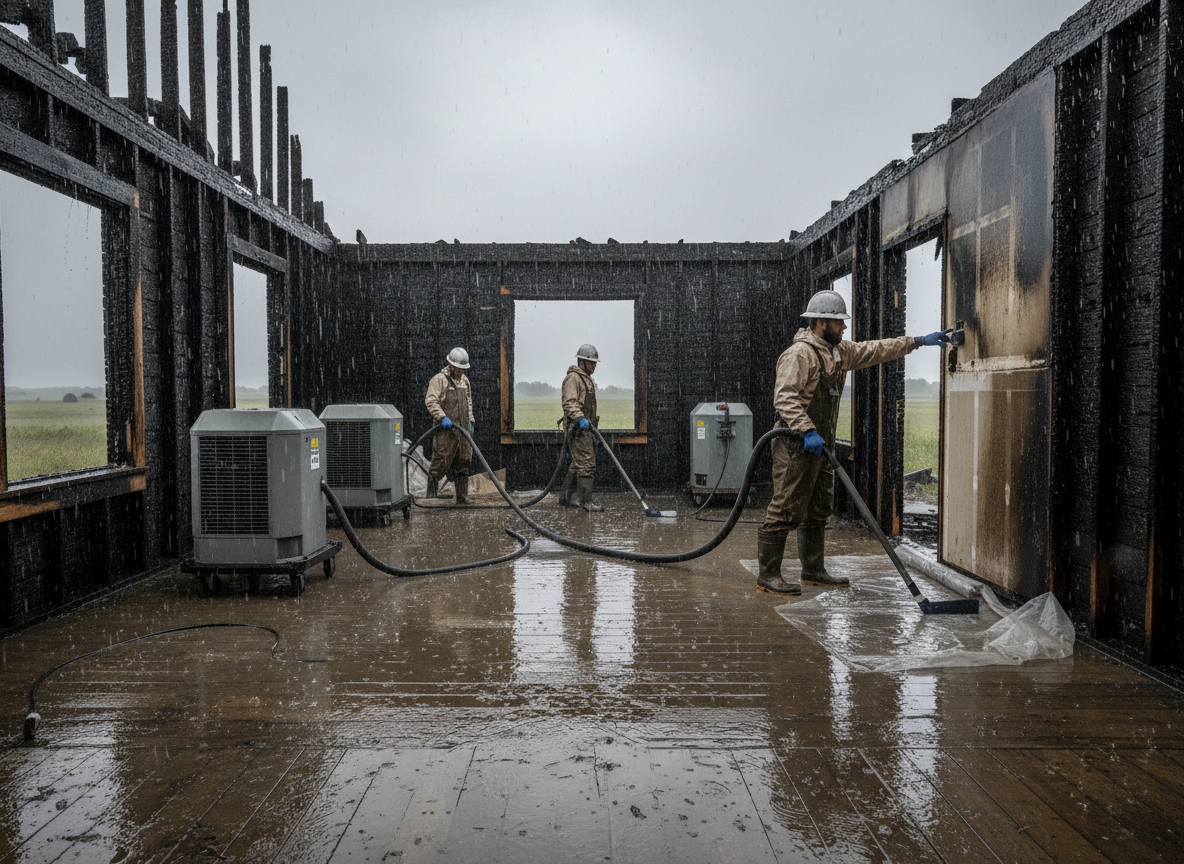
Moisture left after firefighting can linger 5-10 days or more in South Prairie homes during the rainy season when marine west coast climate patterns deliver repeated precipitation. The combination of suppression water and ongoing winter rains raises indoor humidity quickly in Pierce County structures, especially those built before modern vapor barriers became standard. Older homes near Enumclaw and Buckley often feature crawl spaces and attics that trap water against wooden framing, extending drying times beyond what summer conditions allow.
Assessing Water Intrusion in Local Housing Stock
South Prairie and surrounding Pierce County neighborhoods contain many homes from the mid-20th century with balloon framing and uninsulated attics. These features allow firefighting water to travel along floor joists and settle in wall cavities where it mixes with rainwater entering through roof vents during wet winters. Homeowners should start by checking baseboards and electrical outlets for dampness using a moisture meter, focusing first on rooms directly below the fire origin. In areas like Carbonado and Wilkeson, sloped terrain can direct runoff toward foundations, compounding the problem when suppression water already saturates soil against concrete footings. Documenting visible water lines on drywall helps track migration paths before hidden pockets lead to rot in subfloors.
Extraction Methods Suited to Wet Winters
Begin with removal of standing water using portable extractors rated for 10-15 gallons per minute to reduce volume before rains add more. Focus on carpets and padding in South Prairie residences, as these materials hold water against hardwood that swells in high humidity. For homes in Buckley and Enumclaw, open windows only during dry spells to avoid pulling in additional moisture from the marine climate. Place air movers at 45-degree angles along walls rather than straight on, which moves air across surfaces more effectively in older plaster construction common locally. Monitor relative humidity with digital sensors aiming to drop below 50 percent within 48 hours to limit swelling in door frames and trim.
Drying Strategies for Pierce County Conditions
Dehumidifiers sized at 50-70 pints per day handle the volume needed in typical 1,800-square-foot South Prairie homes after fire events. Position units centrally and empty collection tanks twice daily during peak winter rains when outdoor air remains saturated. In attics common to properties near Bonney Lake, direct airflow upward through soffit vents while sealing lower levels to prevent moist air from re-entering living spaces. Check insulation batts for saturation, as wet fiberglass loses R-value and can compress permanently if left damp past 7 days. Fire and flood restoration techniques often combine these steps with targeted drying mats placed under cabinets where water pools unnoticed.
Monitoring for Secondary Issues
Daily moisture readings at multiple points track progress and reveal hidden pockets behind baseboards in older South Prairie construction. Watch for musty odors developing within 72 hours, a sign that microbial growth has begun in wall cavities exposed to both fire water and winter precipitation. In homes near Sumner, where soil retains moisture longer, exterior grading may need temporary adjustment to divert rainwater away from already saturated foundations. What affects fire restoration timelines in rural Washington explains how seasonal rainfall extends these drying periods compared to drier regions. Continue logging readings until levels stabilize within 2-3 percent of unaffected rooms.
Long-Term Prevention in the Rainy Season
After initial drying, apply antimicrobial treatments to wooden framing in crawl spaces to address residual moisture that winter rains can reintroduce. Replace saturated insulation in attics with material rated for higher humidity to match Pierce County conditions. Schedule follow-up checks 2-3 weeks later, as hidden dampness behind drywall can surface once heating systems activate. Properties in Enumclaw often benefit from improved attic ventilation to reduce condensation risks during the wet months that follow any fire event.